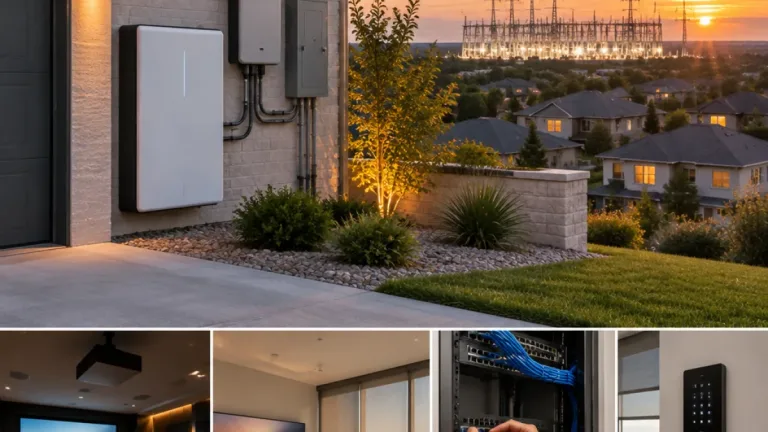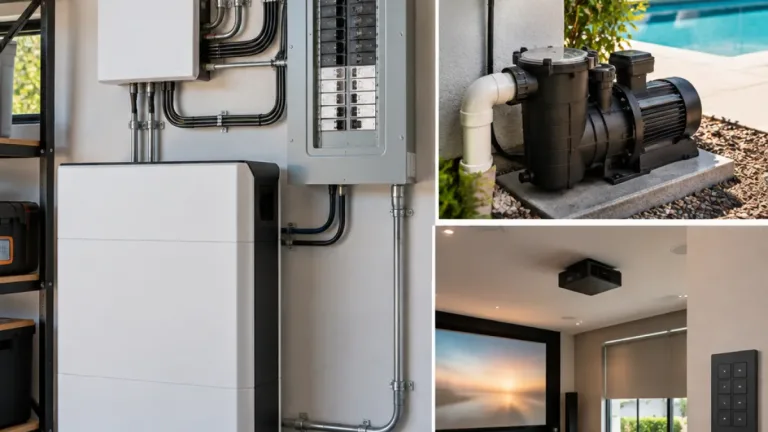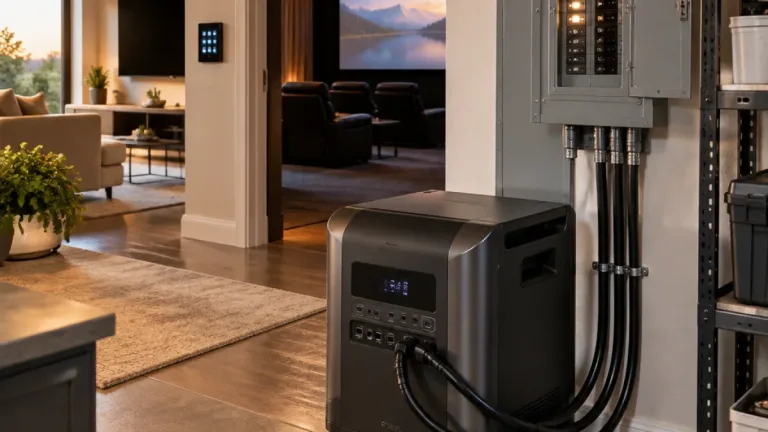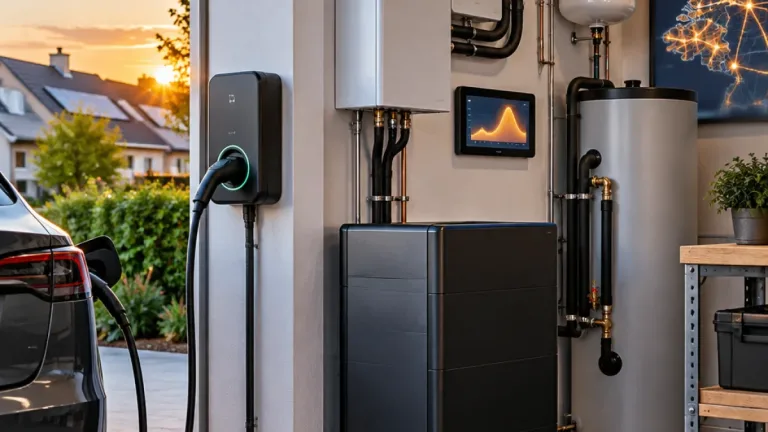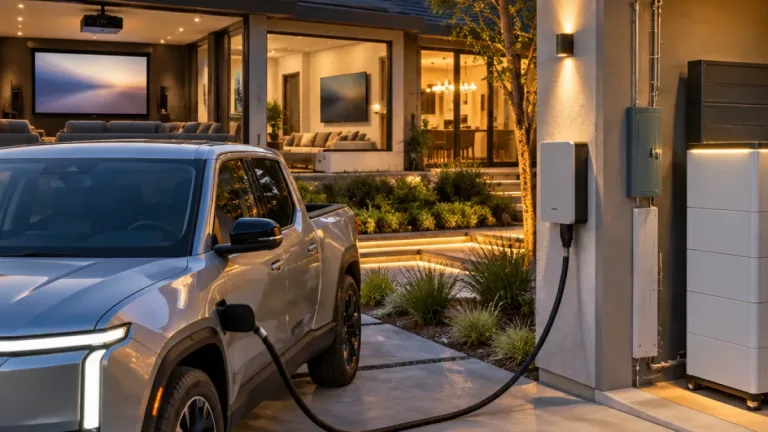
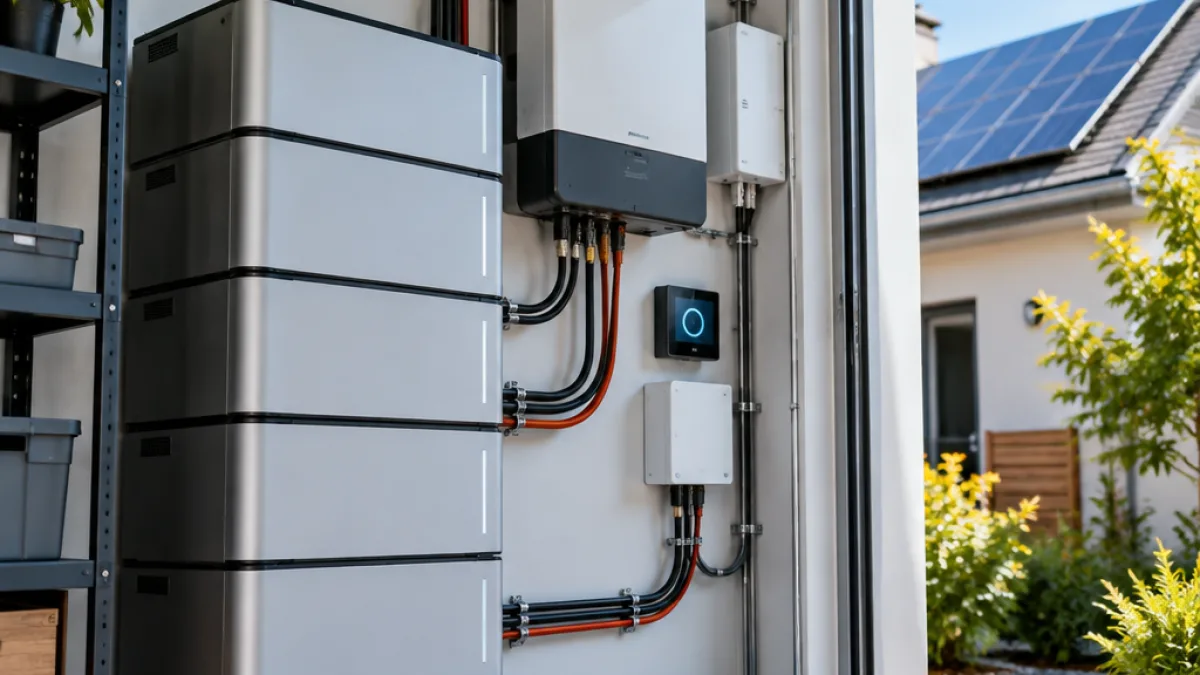
Huawei has introduced the Luterra S2, a modular residential energy system that combines battery storage, a hybrid inverter and artificial intelligence-based energy management. The company says the platform is intended to provide an integrated approach to home energy storage and control.
The system is offered in single-phase and three-phase configurations. Single-phase versions are rated from 3 kW to 10 kW, while three-phase models can deliver as much as 20 kW. That range gives the platform multiple configuration levels for residential projects, although Huawei has not published US availability or pricing in the information provided.
Storage scales through connected systems
The entry configuration contains 5 kWh of storage and provides 3 kW of output. Additional 7 kWh lithium iron phosphate battery modules can expand the system, with Huawei stating that interconnected systems can reach a combined storage capacity of 336 kWh.
Output can also be increased through parallel operation. Huawei says that three 20 kW units working together can produce a combined inverter output of 60 kW. The company positions the modular architecture as a way to scale both storage and power capacity according to the requirements of a project.
| Configuration or feature | Published specification |
|---|---|
| Basic system | 5 kWh storage and 3 kW output |
| Single-phase output | 3 kW to 10 kW |
| Three-phase output | Up to 20 kW |
| Maximum interconnected storage | 336 kWh |
| Parallel inverter output | Up to 60 kW with three 20 kW units |
SiC architecture and passive cooling
Huawei says the Luterra S2 uses its proprietary full-silicon carbide architecture. According to the company, the design is intended to improve efficiency and power density while simplifying installation and commissioning. Huawei also says commissioning and installation can take only minutes, a claim that remains a manufacturer statement rather than an independently verified installation time.
The enclosure uses passive cooling and does not require external fans. Huawei lists operating noise below 29 dB, an ambient operating range from -25° C to about 60° C, and IP66 enclosure protection. The system also has corrosion protection rated up to C5-M.
- Storage begins at 5 kWh and expands through 7 kWh LFP battery modules.
- Three-phase versions provide up to 20 kW of output.
- Huawei says parallel installations can reach 60 kW of inverter output.
- The system uses passive cooling without external fans.
“We are thrilled to introduce Huawei Luterra S2, our next-generation all-in-one residential energy system. By combining full-SiC architecture, AI-driven energy management, and industry-leading safety, Luterra S2 is designed to be smaller, lighter, quieter, safer, smarter and more powerful than ever before.”
Steve Zhang, President of Huawei Distributed PV & BESS Business, made the statement in connection with the introduction. The company describes the platform as an “all-in-one residential energy system,” with its energy-management layer intended to coordinate the battery and inverter functions.
Electrek reported that the Luterra S2 is unlikely to reach the US soon. As a result, the announcement currently provides technical and scaling information for integrators evaluating residential storage architectures, but it does not establish a US dealer channel, ordering timetable or domestic price.