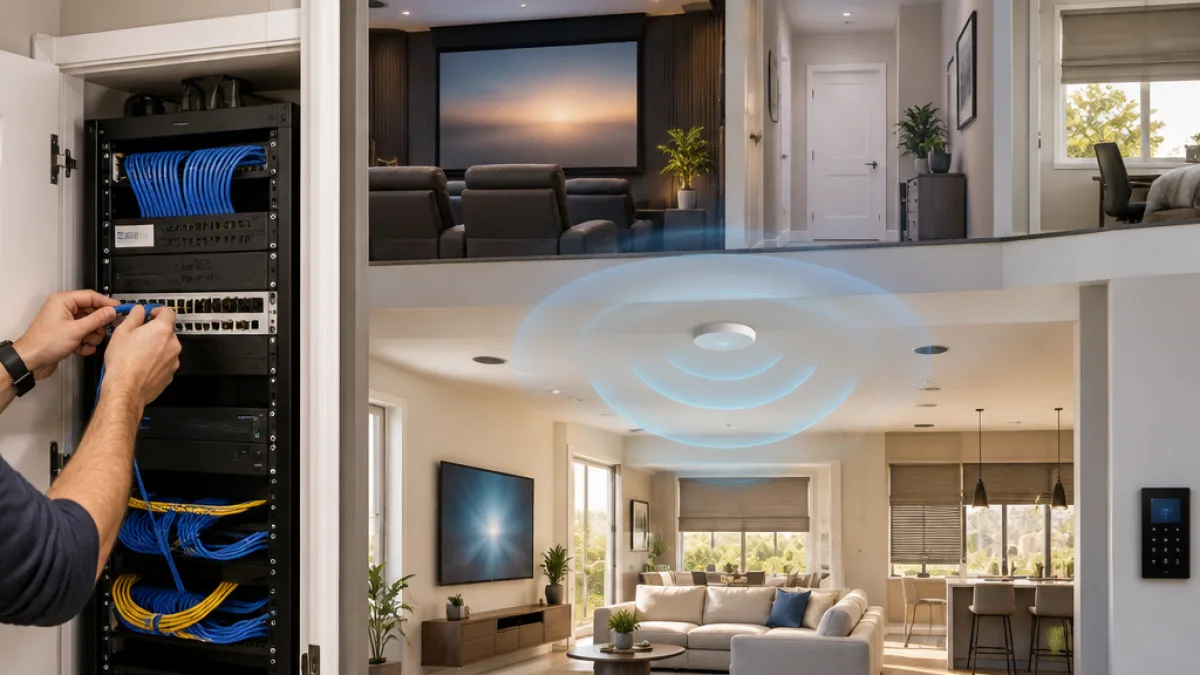
WAVLINK is positioning its work in Wi-Fi and connectivity around a practical installation problem: the location of users and the location of network equipment often do not align. In an interview with Cubed3, Flora Chen of WAVLINK described the company’s development approach as an effort to address that gap across wireless networking, Wi-Fi extenders, docking stations and other connectivity products.
Chen characterized the company’s role as solving what she called “the last mile of connectivity.” She said that the idea began with coverage and has expanded into other parts of the connection, including the user interface, available bandwidth, port density, data capacity and the amount of information that can move at one time.
“We solve the last mile of connectivity. Everything since then has simply been about which dimension that last mile runs along.”
From coverage to capacity
That description places Wi-Fi 7 within a broader development path rather than presenting it as an isolated product category. WAVLINK said its portfolio has grown as the company has considered different ways in which a network can fall short, from insufficient wireless coverage to limits at the interface, connection and data layers.
For professional installers and integrators, the distinction is relevant because a wireless performance issue may not be solved by adding coverage alone. The practical requirement can also involve the equipment’s available ports, the connection between devices and the network, or the volume of data that must be handled. Chen did not attach a numerical throughput claim or a particular Wi-Fi 7 product announcement to the discussion.
How WAVLINK evaluates new categories
Chen said WAVLINK uses a structured screening process before committing to production volume. The company evaluates potential areas using three dimensions, applies three criteria that can eliminate an opportunity and then tests the idea in real-world use before making a larger commitment.
- Demand: WAVLINK looks for recurring usage scenarios across markets and buyer groups, including repeated questions and complaint patterns in user reviews.
- Technical deliverability: The company assesses whether a proposed solution can be delivered technically.
- Portfolio value: An opportunity is given lower priority if it cannot return value to the products WAVLINK already builds.
The company’s stated process is therefore based on more than the appearance of a new technology category. The approach combines observed demand with technical feasibility and practical validation, while also asking whether a new product area connects with the existing portfolio.
A broader connectivity remit
WAVLINK’s comments cover a portfolio that extends beyond conventional wireless networking. The company links its home networking and Wi-Fi extender products with docking and high-speed connectivity solutions, treating them as different expressions of the same effort to connect people, devices and network infrastructure.
The interview presents Wi-Fi 7 as one of the emerging technologies being considered through that lens. Its value, in WAVLINK’s account, depends on the environment in which the connection is used and on the specific limitation that needs to be addressed. That keeps the discussion focused on deployment conditions and repeatable user needs rather than on a technology label alone.