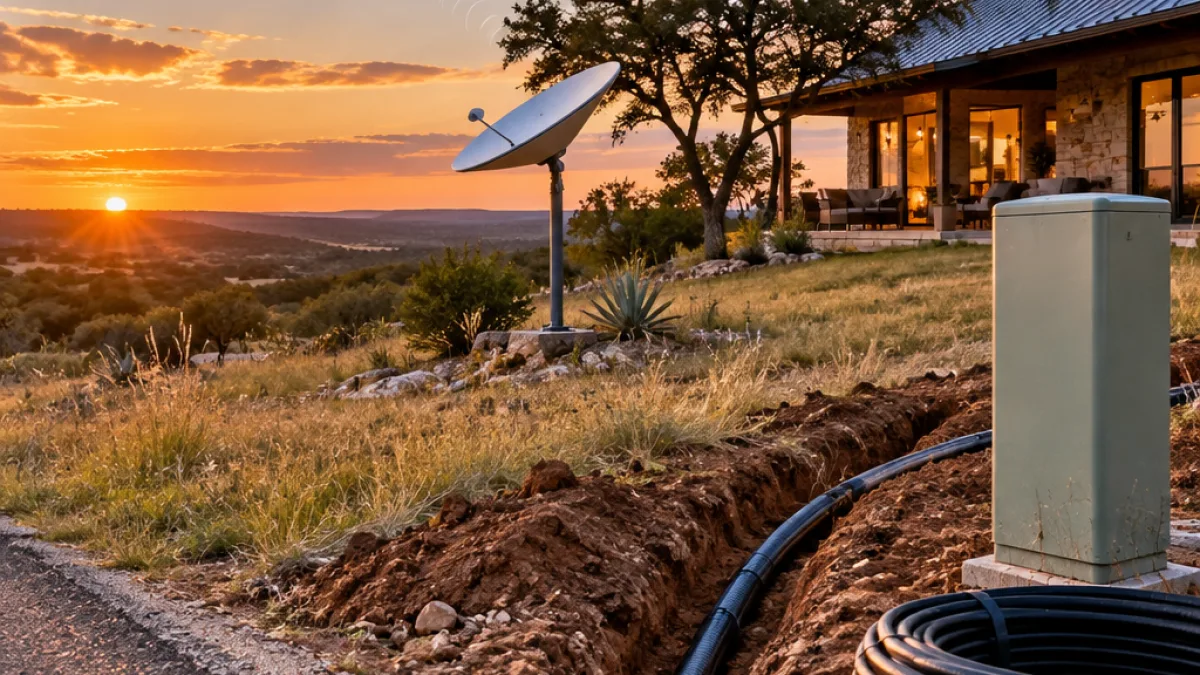
Texas has awarded approximately $109 million in federal broadband funding to SpaceX to connect nearly 64,000 locations through Starlink. The decision reverses the state’s earlier preference for fiber and has prompted scrutiny from Texas senators in both parties, the State Auditor and Democrats preparing to take control of the governor’s office and attorney general’s office in January.
The awards are part of the federal Broadband Equity, Access and Deployment program, created by Congress in 2021 under the Infrastructure Investment and Jobs Act. BEAD was established to extend high-speed internet to underserved areas, particularly rural communities. Texas received approximately $3.3 billion, the largest allocation among the states.
Satellite moves into a larger role
Texas’s initial BEAD plan, approved by federal regulators in 2024, described fiber as “the preferred technology” and classified satellite internet as “non-reliable,” limiting it to last-resort use. The final plan, rewritten in 2025 after federal rules changed, adopted a technology-neutral approach and required states to favor the lowest-cost proposals.
Under that final plan, satellite service was assigned to 27% of the roughly 243,000 locations receiving support. The state committed approximately $1.26 billion to those locations, according to Telecompetitor. Starlink received more Texas locations than any other provider, with the SpaceX service selected to serve nearly 64,000 addresses.
- Texas BEAD allocation: approximately $3.3 billion
- Locations funded under the final plan: roughly 243,000
- Locations assigned to satellite: 27%
- Starlink award: approximately $109 million for nearly 64,000 locations
That phrase appeared in Texas’s earlier plan in reference to fiber. The revised approach ended the formal preference for fiber and was presented as a way to accelerate deployment. The BEAD program had made limited progress before the rule change: no new projects had broken ground by the end of 2024, and the overhaul ultimately pushed the program back by another year.
Funding remains frozen
Payments to every Texas grant recipient have been frozen since August. The pause adds a further operational issue for the companies selected to extend service, including providers responsible for network construction, customer equipment and connectivity to rural homes. The review is taking place as the state reassesses a plan that assigns a substantial share of publicly funded locations to satellite rather than fixed fiber infrastructure.
Starlink is already the dominant satellite internet provider in Texas, one of its largest markets, according to Ookla. SpaceX reported 13.6 million Starlink consumer subscribers worldwide in the third quarter, up from 12 million in the second quarter. The company has described the Texas awards within a broader federal program whose rules now permit satellite proposals to compete with fiber and other broadband technologies on cost.
| Measure | Figure |
|---|---|
| Federal program | Broadband Equity, Access and Deployment |
| Texas allocation | Approximately $3.3 billion |
| Starlink funding | Approximately $109 million |
| Starlink locations | Nearly 64,000 |