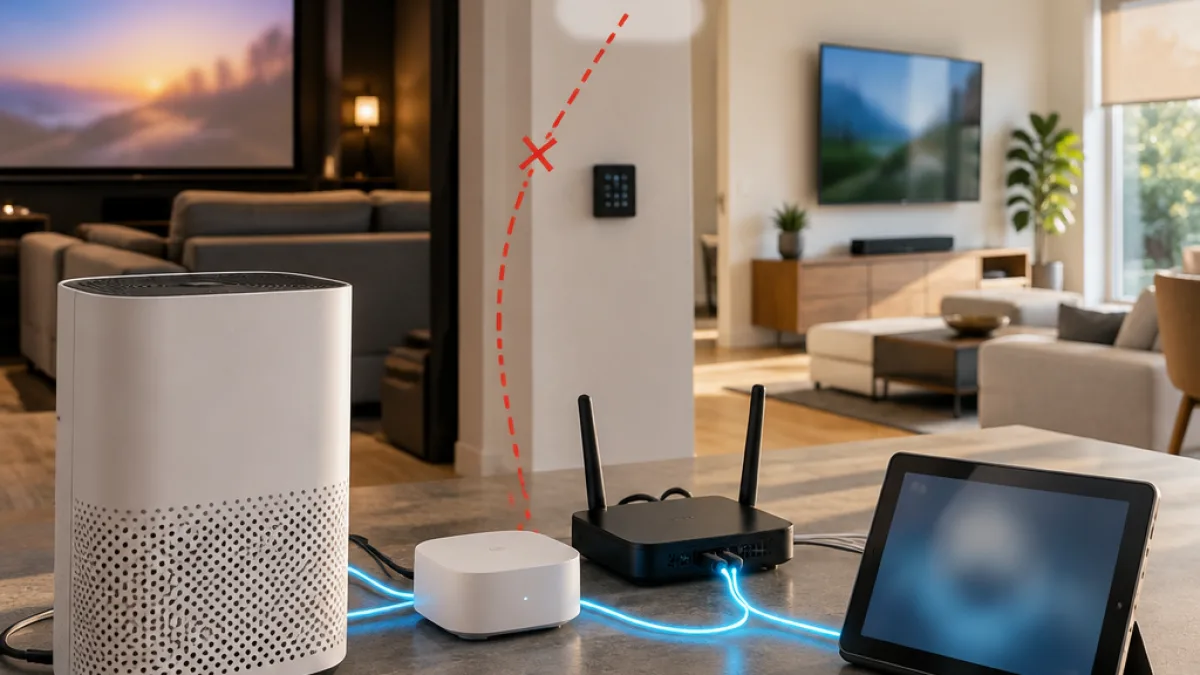
A developer has created a community project that connects Coway’s discontinued Airmega IconS air purifier directly to Home Assistant, avoiding the manufacturer’s cloud-dependent integration. The project, called coway-local, can also expose the purifier to Apple Home through Home Assistant.
The work by Scott J. Goldman followed repeated problems with the community integration that had relied on Coway’s IoCare+ service. Goldman said the integration failed regularly as the service changed, pages used by the integration were modified, or Coway’s servers became unavailable. He also said his account was banned after he ran an older version of the integration, leaving him without remote control for several weeks.
“at least once or twice a year”
Goldman used those words to describe how often the cloud-based integration had broken. Coway had initially banned the community integration because the company said it was placing too much load on its servers. The company later permitted it after a dispute with the community, according to the report by Tom’s Hardware.
How the local connection works
The project takes advantage of the purifier’s setup process, which downloads a trusted certificate through an unencrypted HTTP connection. Goldman intercepted that request with mitmproxy/mitmweb and redirected the traffic with nftables. The request sought an AmazonRootCA1.pem file from an AWS S3 bucket in Seoul.
His proxy supplied its own certificate authority and replaced a response value containing the purifier’s device certificate and private key. The purifier’s commands are carried over MQTT over TLS on port 8883 and routed through AWS IoT. Goldman said the proxy did not decode the MQTT traffic, but it did make the raw stream visible for analysis.
An unnamed AI tool helped match that traffic to button presses made in the mobile application. Goldman also reconstructed the purifier’s Bluetooth protocol by reviewing logs from an Android phone operated through adb. He estimated that doing the Bluetooth analysis manually would have taken hours or days; the reconstruction took about 20 minutes.
What the project illustrates for integrators
The Airmega IconS case highlights the operational limits that can arise when a connected appliance depends on a vendor-controlled service after its official support changes. The local project does not represent an official Coway integration, and the reported method involves altering the purifier’s network and certificate-handling behavior rather than using a published installer interface.
- Device: Coway Airmega IconS, a discontinued air purifier
- Local platform: Home Assistant, with access to Apple Home through that platform
- Cloud dependency: Coway’s IoCare+ service
- Reported protocols and tools: MQTT over TLS, Bluetooth, mitmproxy/mitmweb, nftables and adb
Goldman said he first considered forging a certificate by exploiting weaknesses associated with eMudhra, a certificate authority whose private keys had reportedly been found to be weak the previous month. He instead used the purifier’s unencrypted certificate download. The report also says ChatGPT generated firewall rules, while Claude blocked a request to configure a Raspberry Pi to intercept the purifier’s traffic.