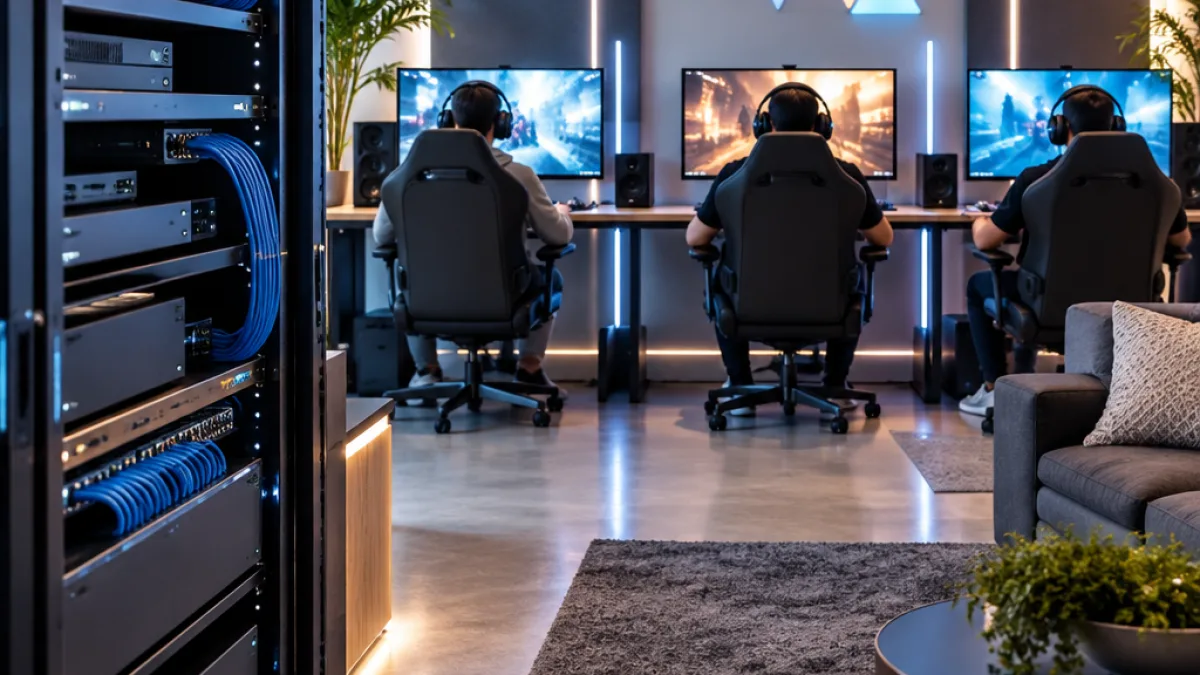
The HDMI 2.2 Specification establishes a higher performance target for gaming systems, with implications for integrators designing residential gaming rooms, dedicated theaters and commercial esports facilities. The specification increases bandwidth to 96Gbps, twice that of the previous generation, through the next-generation HDMI Fixed Rate Link technology.
Gaming is placing more demanding requirements on the complete signal path. Display manufacturers are promoting advanced HDMI gaming capabilities to both casual and competitive players, while universities and tournament operators are building dedicated facilities. In those environments, reliable connectivity must serve every display, player position and audio zone rather than just a single television.
Higher resolution and refresh-rate combinations
HDMI 2.2 is designed to carry combinations of resolution and refresh rate that exceed the capabilities associated with earlier HDMI generations. The specification supports 4K at up to 480Hz, 8K at up to 240Hz and resolutions as high as 10K. It also supports uncompressed 4:4:4 video at combinations including 4K@240 and 8K@60 in 10-bit and 12-bit color depth.
| HDMI 2.2 capability | Figure or feature |
|---|---|
| Bandwidth | 96Gbps |
| Resolution and refresh rate | 4K at up to 480Hz; 8K at up to 240Hz |
| Maximum stated resolution | Up to 10K |
| Uncompressed video | 4:4:4 at 4K@240 and 8K@60 in 10-bit and 12-bit depth |
For installers, the specification’s gaming functions remain as important as its headline bandwidth. Variable Refresh Rate (VRR) synchronizes the display with the source’s frame rate to reduce lag, judder and tearing. Auto Low Latency Mode (ALLM) automatically places the display in its lowest-latency mode when gameplay starts, while Quick Frame Transport (QFT) moves frames to the display more quickly for gaming and virtual-reality applications.
Audio remains part of the installation
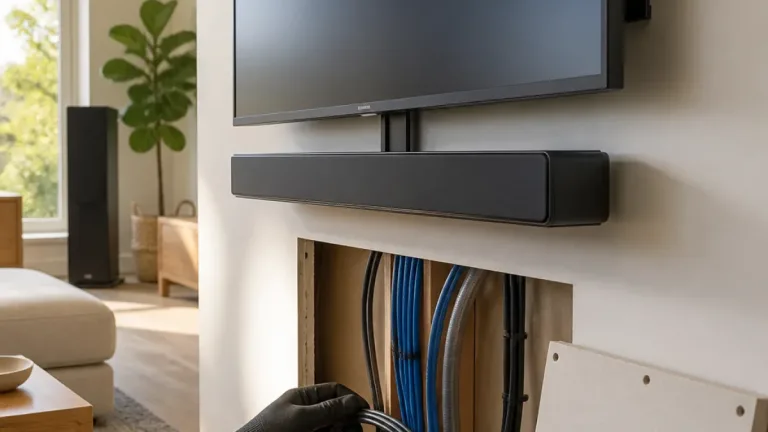
The video specification does not remove the need to plan the audio chain. A premium audio/video receiver with HDMI Enhanced Audio Return Channel (eARC), paired with an immersive speaker layout, is identified as one approach for gaming systems. Where space is limited, an eARC soundbar can provide surround sound. eARC also carries object-based audio formats, keeping the display, receiver or soundbar relationship central to system design.
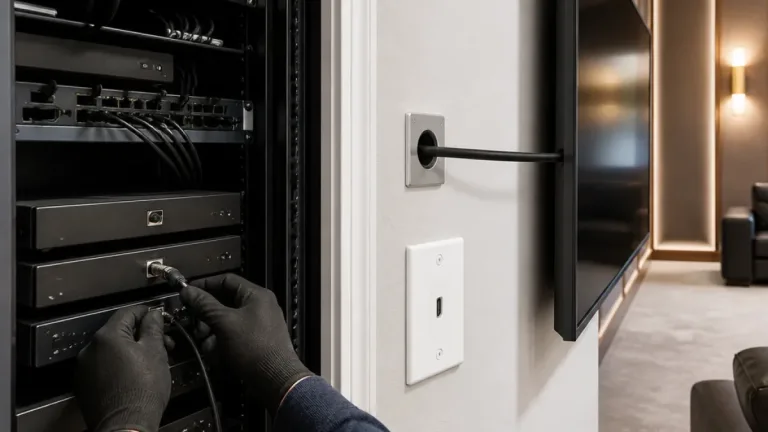
HDMI 2.2 is backward compatible with existing consoles, PCs, monitors and AV receivers. That compatibility allows those products to remain part of an installation, while the specification provides a forward-looking performance level for new designs. Integrators still need to treat the complete HDMI path as a system: the source, display, receiver and interconnect must be considered together when a project is specified for high resolution and high refresh rates.
- Residential gaming: Integrators can use the specification’s higher bandwidth target when planning dedicated gaming rooms and theater systems.
- Esports facilities: Universities and tournament venues must account for connectivity across displays, seating positions and audio zones.
- Audio integration: eARC and the receiver or soundbar configuration remain important when gaming systems include immersive sound.
For custom installers, the central change is not limited to the display. HDMI 2.2 places greater emphasis on matching the source, signal distribution, display capabilities and audio return path. Systems designed around the specification can preserve compatibility with current equipment while establishing a higher ceiling for future gaming sources and displays.