Global demand for channel trays is projected to rise at an approximate compound annual growth rate of 4.2% from 2026 through 2035, according to the latest market analysis from IndexBox. The report identifies cable-management infrastructure as a foundational part of electrical systems serving buildings, industrial plants, data centers and transportation projects.
Channel trays provide structural support for routing and protecting power and data cables. For manufacturers, distributors and specifiers, the category spans several configurations rather than a single product type. IndexBox identifies ladder, trough, wire mesh, solid-bottom and ventilated designs within the market, with selection influenced by load-bearing requirements, heat dissipation and the way cable routes are incorporated into modular construction.
Demand shifts toward denser infrastructure
IndexBox describes the market entering 2026 with broader demand fundamentals and a more regionally diversified supply architecture. Replacement activity in mature construction markets is expected to support baseline volume, while new installation work in digital infrastructure and renewable energy contributes additional demand.
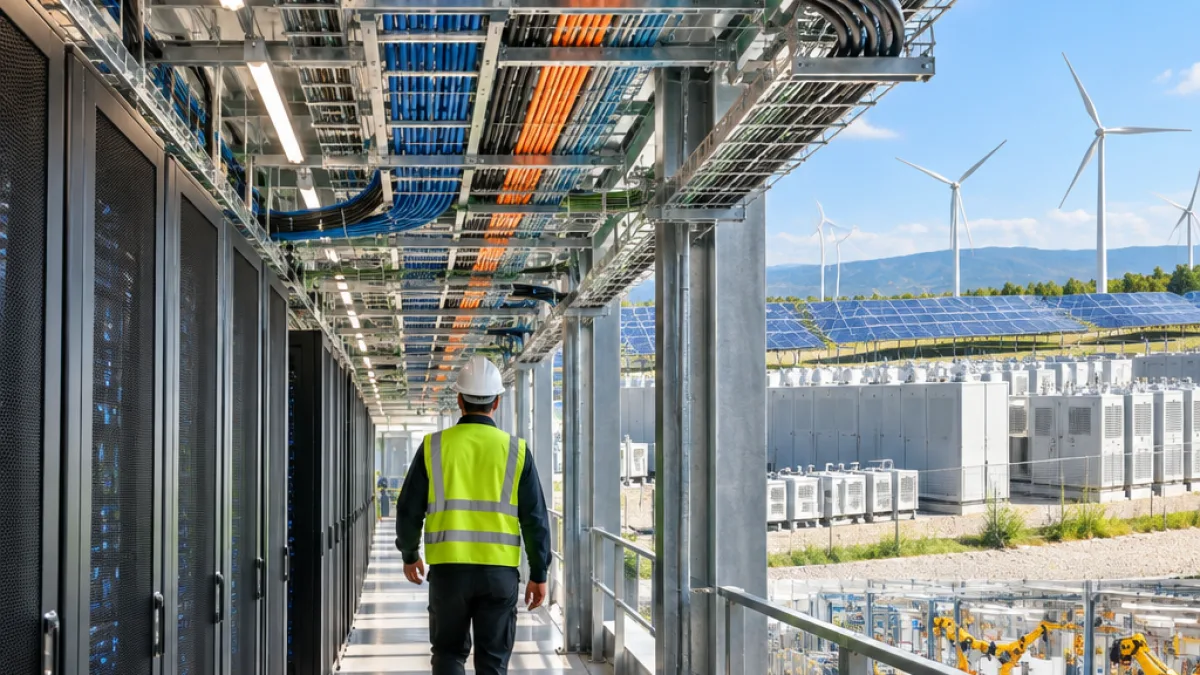
The report points to a change in the mix of applications through 2035. Traditional commercial construction remains part of the market, but higher-density cable runs in data centers, electrification of industrial processes and the expansion of renewable energy projects are identified as important growth drivers. Industrial automation is also included among the applications contributing to the shift.
- Data centers: higher-density power and data cable runs
- Renewable energy: additional infrastructure installation activity
- Industrial automation: expanding cable-support requirements
- Commercial buildings and plants: replacement and retrofit demand
Material selection and installation requirements
Material selection is also changing, according to IndexBox. Aluminum and polymer-based trays are gaining share in applications where corrosion resistance and lower weight are important. The report presents that movement alongside continued demand for systems selected for load capacity, thermal performance and compatibility with modular construction practices.
For cable-management suppliers and distribution channels, the findings place product configuration and application requirements at the center of the market. Tray type, material and ventilation characteristics must be matched to the cable-routing environment, while commercial-building installations are also being shaped by stricter fire and safety codes. IndexBox describes these factors as part of the market’s longer-term demand fundamentals rather than as a short-term construction cycle.
| Market factor | Direction identified by IndexBox |
|---|---|
| Global demand, 2026-2035 | Approximately 4.2% compound annual growth |
| Key applications | Data centers, renewable energy and industrial automation |
| Tray configurations | Ladder, trough, wire mesh, solid bottom and ventilated |
| Material trend | Greater use of aluminum and polymer-based trays where weight and corrosion resistance matter |
IndexBox’s baseline scenario calls for steady expansion across the forecast period, but not at the same rate in every region or product category. Advanced economies are expected to rely more heavily on replacement and retrofit work in existing buildings and plants, while emerging markets add demand through new infrastructure construction.
The analysis covers market size, segmentation, trade flows and competitive dynamics through 2035. Its central finding is that channel trays are moving beyond a conventional commercial-building application as digital infrastructure, renewable energy and industrial electrification increase the need for organized, supported and protected cable routes.