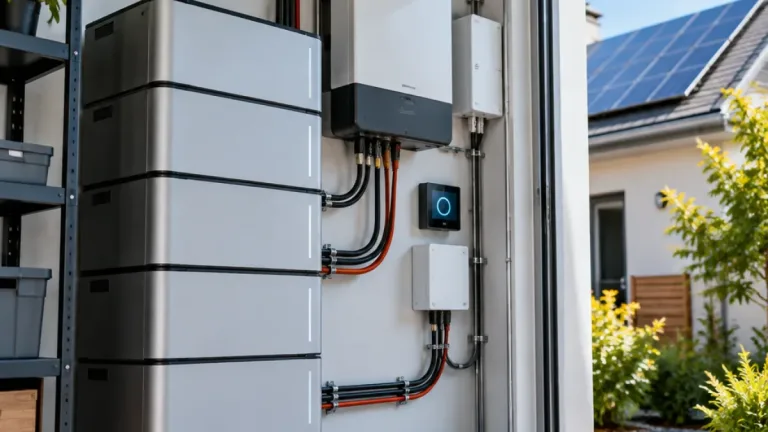
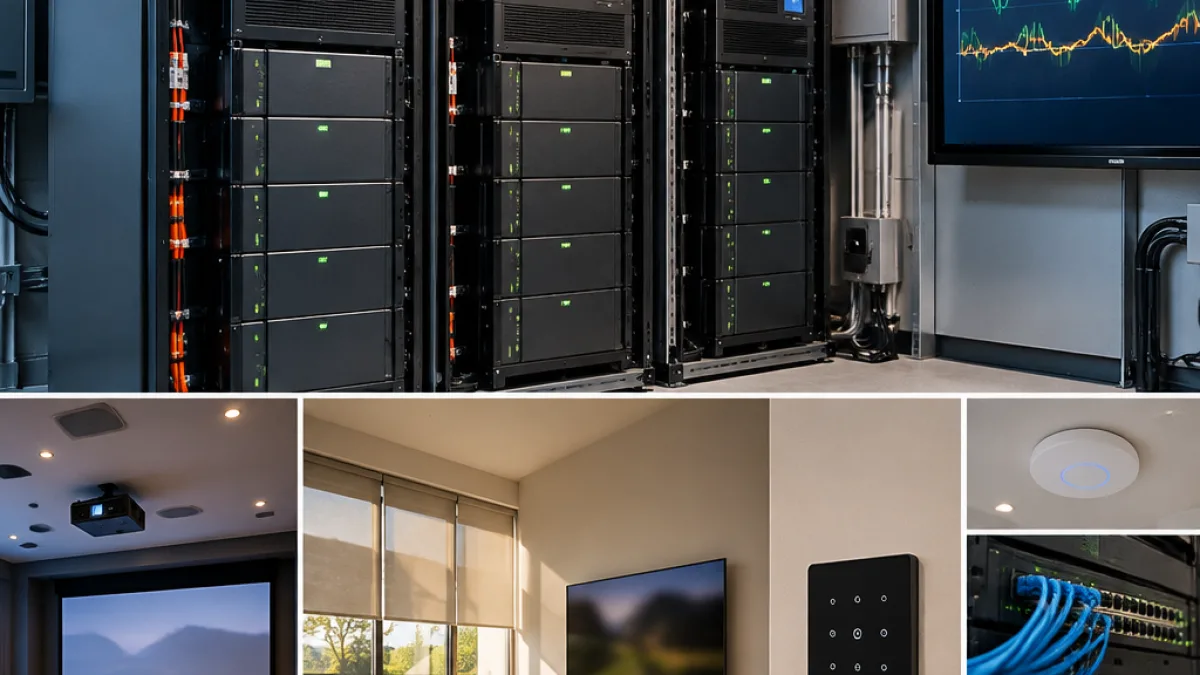
Automatic battery checks in uninterruptible power supplies may account for recurring electrical pulses observed on power grids across five continents, according to research led by Dirk Witthaut, a physicist at Germany’s University of Cologne. The work was published last month in Nature Energy and reported by ScienceAlert.
The pattern has appeared at roughly 60-second intervals for more than a decade. Researchers examined detailed electricity readings from the Forschungszentrum Jülich campus, where four buildings equipped with backup-power systems displayed the same behavior. Their analysis identified short bursts of current from batteries and followed the resulting fluctuations through one building to its connection with the public high-voltage network.
Digital time signals may synchronize the checks
The equipment manufacturer confirmed that the activity came from automatic self-tests of the batteries. Although the backup systems operated independently, digital clocks synchronized through external time signals appeared to cause the checks to occur at nearly the same time. That coordination provided a possible explanation for why similar variations have been recorded across otherwise separate electrical systems.
Earlier observations by Scandinavian researchers had documented unusual grid-frequency changes recurring each minute as far back as 2014. Similar patterns were later reported in mainland Europe, the U.K., Australia and the U.S. Hydropower systems had previously been associated with some of the oscillations, but the geographic spread pointed to a broader source.
| Research finding | Reported detail |
|---|---|
| Equipment involved | Uninterruptible power supplies with battery backup |
| Observed interval | Approximately once every 60 seconds |
| Locations showing the pattern | Four buildings at Forschungszentrum Jülich |
| Reported magnitude | Generally a few millihertz |
Small fluctuations, wider infrastructure implications
Electrical grids must continuously balance generation and consumption. Grid frequency rises when production exceeds demand and falls when demand is greater than supply; alternating-current systems typically operate at 50 or 60 hertz. The researchers said the pulses they observed were generally only a few millihertz and did not endanger grid stability.
At the same time, the research team warned that grid dynamics can amplify small fluctuations and increase wear on infrastructure. The finding is relevant to facilities that depend on battery-backed power, including hospitals, data centers and laboratories. As battery installations, data centers and internet-connected equipment become more common, the number of devices capable of carrying out scheduled or automated checks may also increase.
- The recurring pattern was observed across power systems on five continents.
- Measurements at Forschungszentrum Jülich connected the fluctuations to battery current from UPS equipment.
- The reported pulses were small and were not identified as a threat to grid stability.
The research does not describe a failure of the backup systems themselves. Instead, it identifies the timing of routine self-tests as a potential contributor to a long-running, low-level grid-frequency pattern. For professional technology and power-management projects, the findings place UPS behavior within the wider electrical environment that supports connected facilities and other critical loads.