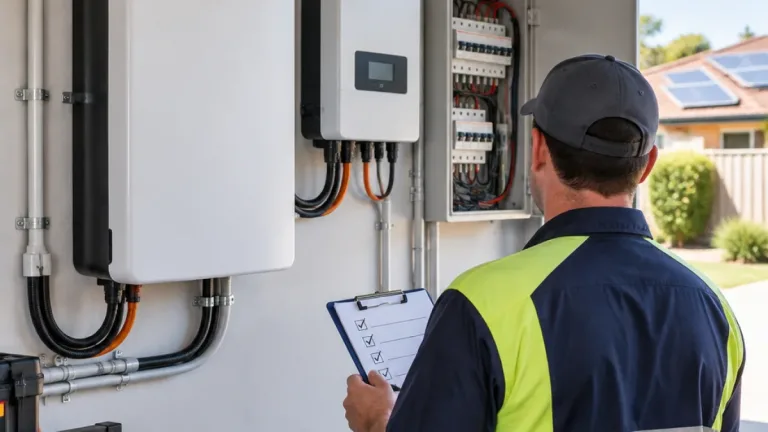
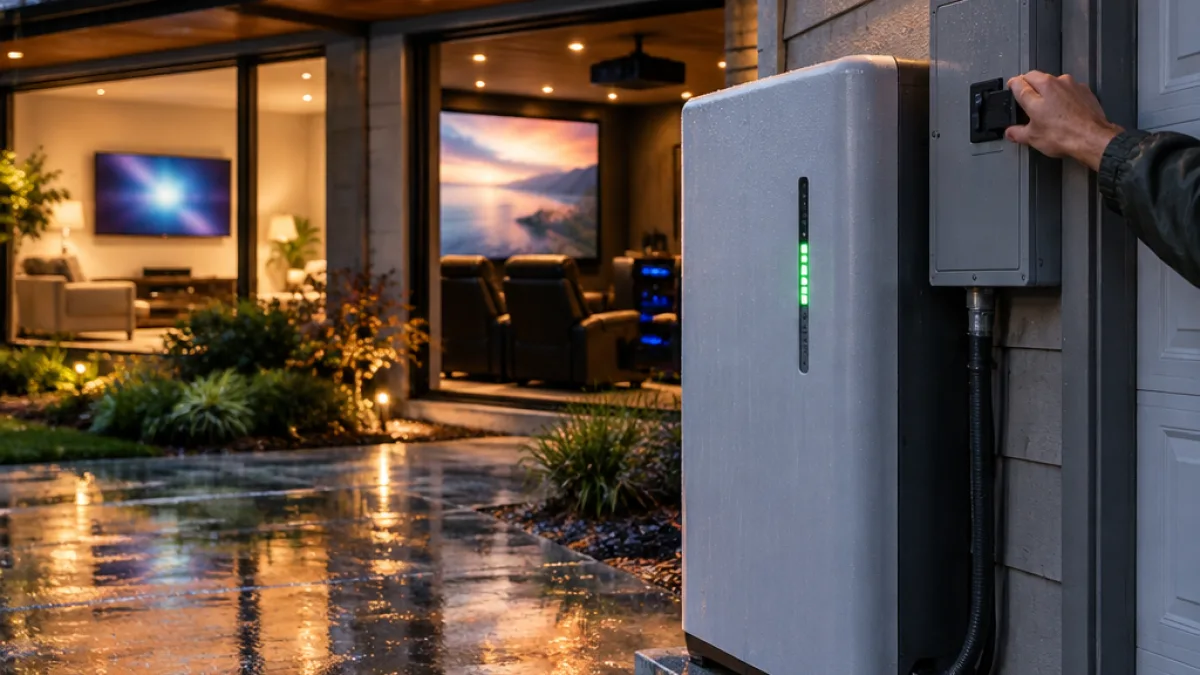
A Northern California homeowner manually placed a 30 kilowatt-hour home battery into emergency backup mode after the system did not receive a National Weather Service storm warning. The battery was reported to be at 44% charge when the homeowner intervened, highlighting how automated preparation can depend on the category of alert issued for a specific location.
The incident was described in a post on a home battery subreddit and reported on November 26, 2026. The homeowner said the system had provided weather advisories but had not begun the automatic preparations associated with a National Weather Service warning. The available account does not identify why the warning was not received, and it does not name the battery manufacturer.
Alert category became the trigger
Home battery systems can use official weather information to prepare for a possible outage. In the case described, the distinction between an advisory and a warning was significant: the system remained in its normal operating state until the homeowner selected emergency backup manually. The National Weather Service, part of NOAA, issues watches, warnings and advisories for the United States.
The reported readings came from the homeowner's battery and solar equipment, while a nearby county rain gauge recorded 3.8 inches of rain. Storm conditions can also reduce solar production, making the timing of a reserve decision more consequential for households that rely on stored energy during an outage. That combination of lower generation and delayed preparation was the central concern raised by the account.
| Reported item | Detail |
|---|---|
| Battery capacity | 30 kilowatt-hours |
| Charge when manual action was taken | 44% |
| Nearby rain-gauge reading | 3.8 inches |
| Manual reserve reported by a Bay Area commenter | 80% |
Residents compared different responses
The discussion expanded beyond the original homeowner. A commenter in Humboldt County reported the issue to the battery manufacturer and contacted the National Weather Service office in Eureka. Another Bay Area participant said the reserve was raised to 80% before backup was activated, and shared the National Weather Service's location-based forecast map.
- The homeowner manually enabled emergency backup while the battery showed 44% charge.
- The reported weather information consisted of advisories rather than a National Weather Service warning.
- Other participants used a higher reserve setting or contacted the manufacturer and the NWS office in Eureka.
For professional installers and energy integrators, the account puts attention on the relationship between weather-data services, alert classifications and a battery's operating logic. It also illustrates the importance of explaining manual reserve controls during commissioning and customer handoff, particularly where storm exposure and solar production are concerns. The incident itself does not establish whether the behavior resulted from a software issue, a communications problem, location settings or the absence of a qualifying warning; those causes were not identified in the reported account.
The episode was reported on November 26, 2026. It leaves the practical question focused on system behavior rather than battery capacity alone: when an area receives an advisory but not a warning, the homeowner may remain responsible for deciding whether to preserve stored energy for backup.