The relationship between residential technology integrators and interior designers is becoming more established, with designers showing a greater presence at industry events and professional organizations recognizing smart-home work. The shift was reflected this year when the Interior Design Society (IDS) introduced a Best Smart Home category in its awards program.
The inaugural award went to New York integrator Sights-N-Sounds, led by Joe and Joey Calise, for a Long Island residence designed by Keith Baltimore of Baltimore Design Group. Joe Calise, who also serves as vice president of the IDS national board, said the new category reflects a relationship that has been developing across both fields.
“I think designers are realizing that homeowners want technology. It was destined to happen the same way our industries are kind of merging together.”
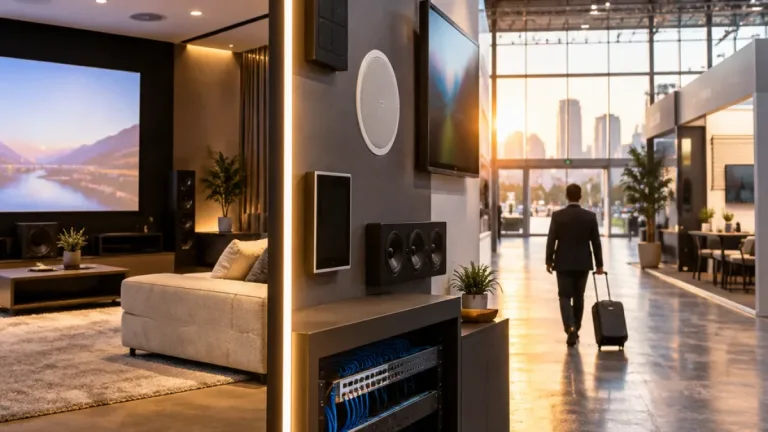
The change is also visible at CEDIA Expo. The event was once attended predominantly by integrators, but designers are now walking the show floor, according to Calise. Their participation places product selection, control interfaces and technology integration closer to the design decisions made at the start of a residential project.
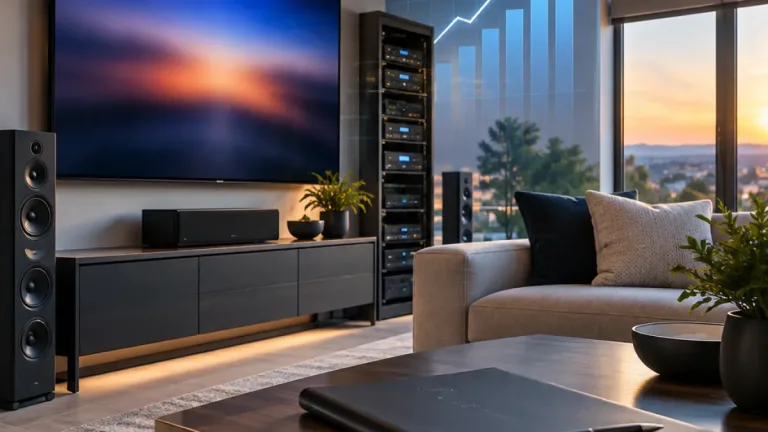
Technology is increasingly expected to disappear into the design
A second example comes from Nerve of Park City, Utah, which received three 2026 CE Pro Home of the Year awards for Pinnacle 2, an 18,000-square-foot residence containing 163 motorized shades. Todd Astill, the company’s founder and CEO, described the expectation among luxury clients as “more tech with less awareness of the technology.”
That preference is reinforced by CE Pro’s 2026 Design & Tech survey of integrators and builders. The respondents were primarily established small and midsized businesses, with approximately 82% identifying as integrators or dealers and 6% as builders. The most common revenue band among respondents was $1 million to $2.49 million, while project budgets were distributed relatively evenly across the $25,000 to $249,999 range.
| Survey measure | Reported result |
|---|---|
| Integrators or dealers | About 82% |
| Builders | 6% |
| Most common company revenue range | $1 million to $2.49 million |
| Respondents naming lighting control as a fast-growing category | 82% |
| Respondents naming motorized shading as a fast-growing category | 73% |
Lighting and shading lead category growth
Lighting control and motorized shading were identified as the fastest-growing categories in the survey, named by 82% and 73% of respondents, respectively. Both ranked ahead of audio and video. The results point to project demand extending beyond traditional entertainment systems and toward technologies that affect the atmosphere and daily operation of the home.
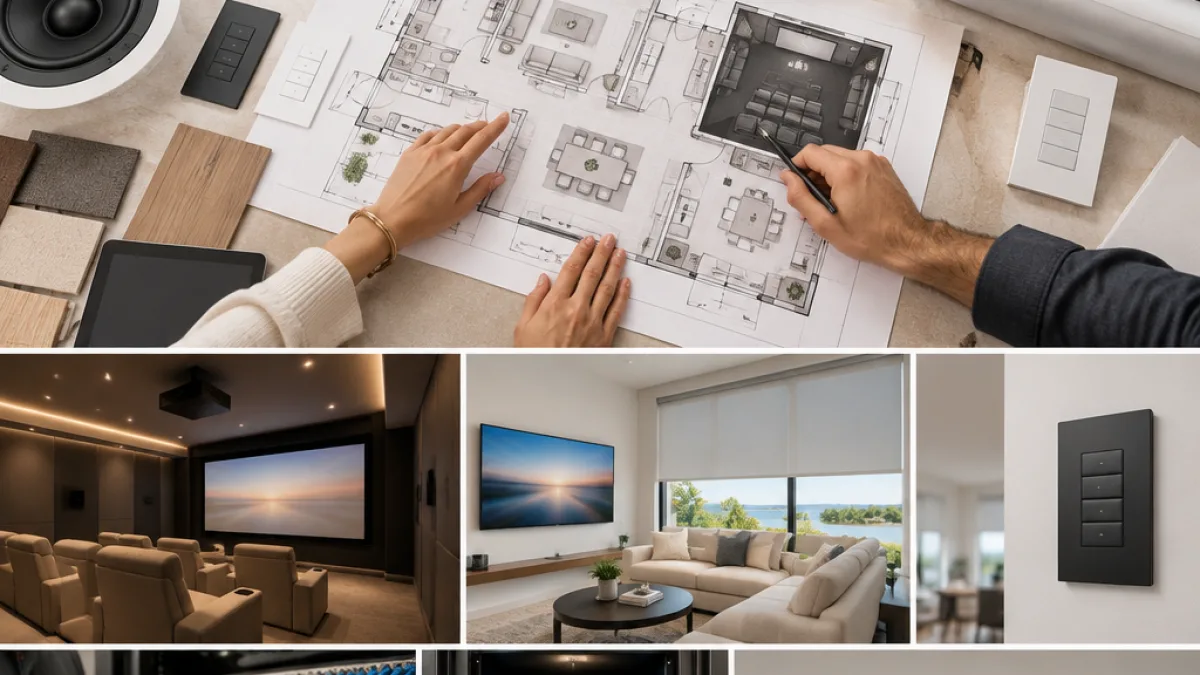
More than half of respondents said clients consider invisible technology very important. In addition, 79% reported that matching keypads, speakers and panels to interior finishes matters on most or every project. For integrators, those findings place visual coordination alongside system performance and control functionality when technology is specified.
- Lighting control and motorized shading were the leading growth categories in the survey.
- More than half of respondents said concealed technology is very important to clients.
- The largest reported friction point was getting involved early enough in the project.
Early participation remains the principal challenge identified by the survey. Integrators and builders described the timing of their involvement as the biggest source of friction, even as the work becomes more closely tied to architectural and interior decisions. The award activity, designer participation at CEDIA Expo and survey responses together show a trade relationship increasingly organized around coordinating technology with the design of the home rather than adding systems after the major design choices have been made.