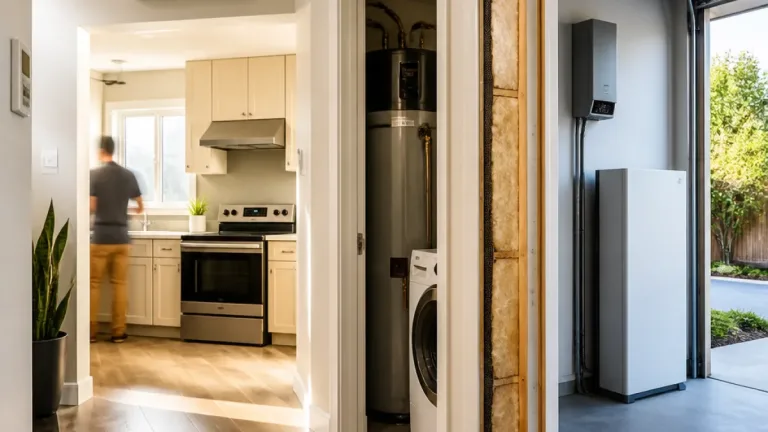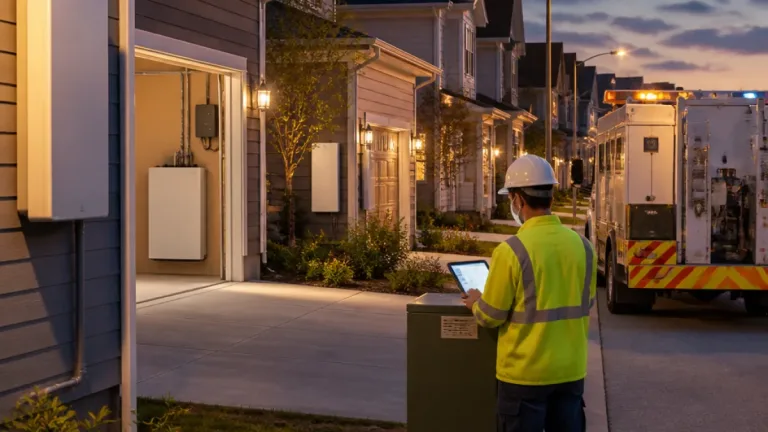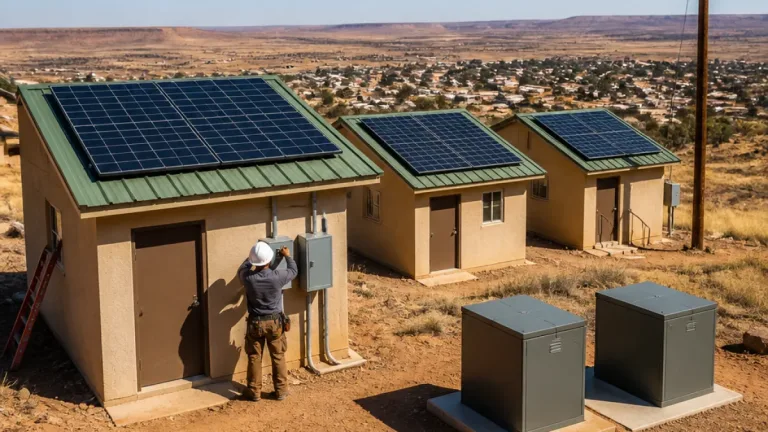
Residential battery systems paired with rooftop solar are already operating as a grid resource in California, providing peak-hour energy and helping manage local demand, according to reporting by Grist that cites the energy-focused nonprofit Common Charge.
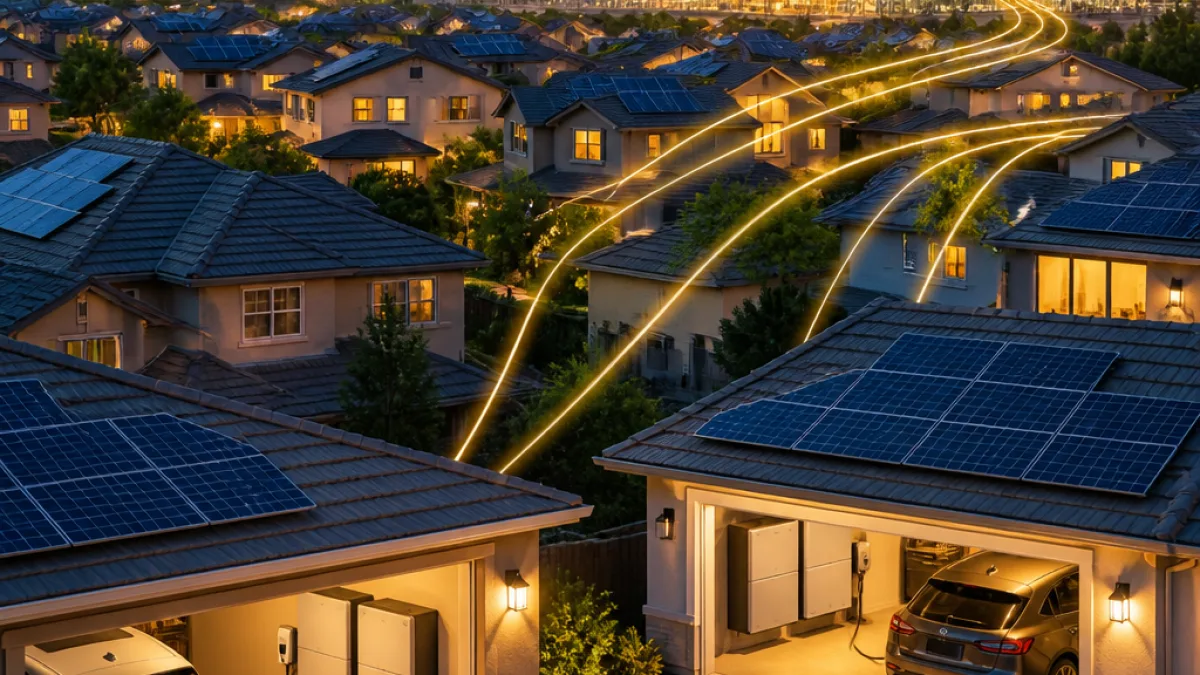
“According to the energy-focused nonprofit Common Charge, as the mercury climbed on October 6, home batteries from Tesla and Sunrun provided enough to power every home in San Francisco and San Jose, whose combined population is about 1.8 million, during peak hours,” Matt Simon writes for Grist.
The Grist piece describes residential batteries from companies including Tesla and Sunrun discharging during a heat-driven peak on October 6. The report frames those distributed storage assets as a lower-cost alternative to importing generation from other states when local demand spikes.
What the report documents
The coverage assembled by Grist and cited material from Common Charge highlights several factual points relevant to the professional channel:
- Scale: Common Charge attributes enough combined output from home batteries to serve the households of San Francisco and San Jose—about 1.8 million people—during peak hours on the cited day.
- Actors: The systems named in the report included installations by Tesla and Sunrun.
- Grid role: Home batteries were used to reduce peak demand and to supply local loads when temperatures and power use rose.
The Grist report also notes industry interest in vehicle-to-grid (V2G) technologies. It summarizes reporting that some companies are exploring ways for electric vehicles to return unused energy to the grid; an account in the extract calls EVs “basically giant batteries on wheels.”
Implications for solar-plus-storage and installers (factual background)
Residential battery deployments used in aggregation to meet peak demand are an operational model utilities and third-party aggregators increasingly pursue. Aggregated residential storage can be dispatched during system peaks, and the Grist/Common Charge account provides a concrete example of that behavior on a large urban scale. The piece does not provide vendor-level dispatch details, contractual terms for aggregation, or the revenue streams involved.
Grist’s article places the observed event in a broader policy and industry context: batteries reduce dependence on out-of-state generation during peaks and address solar’s intermittency by time-shifting production. The report also identifies expanding interest in using EVs as bi-directional resources.
What the extracted reporting does not say
The cited material does not publish a breakdown of installed battery capacity, the number of participating systems, the dispatch duration or market payments received by owners in the event. It also does not provide technical details such as interconnection arrangements, aggregator identities beyond the firms named, or the specific telemetering used to coordinate dispatch.
For installers, integrators and distributors, the Grist/Common Charge account is a factual example of distributed residential storage performing at city-scale during a demand event. The story signals ongoing activity in aggregation, time-shifting of solar output and experimentation with vehicle-to-grid, while leaving operational and commercial specifics to future reporting and formal program documents.
| item | detail from report |
|---|---|
| cities cited | San Francisco and San Jose (combined population ≈ 1.8 million) |
| companies named | Tesla, Sunrun |
| reported function | home batteries provided enough energy during peak hours to power the cited population |