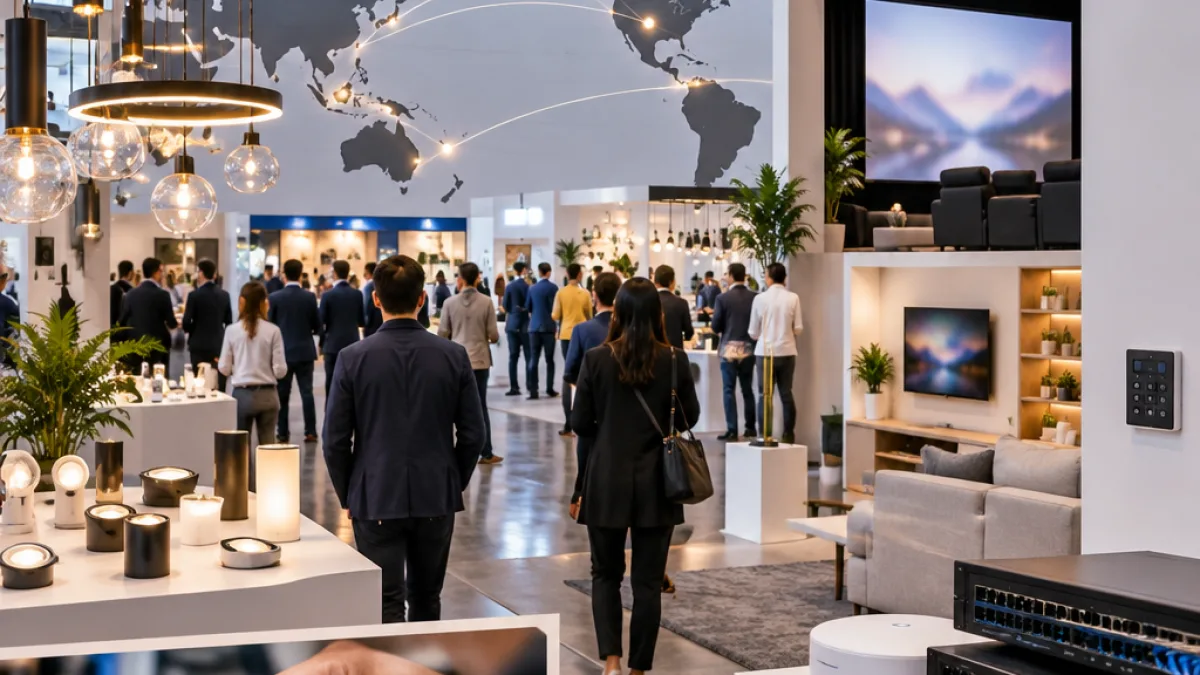
The Hong Kong International Lighting Fair put open control systems and supply-chain diversification at the center of its 2026 edition, according to Inside Lighting. The fair ran from October 27 through October 30 at the Hong Kong Convention and Exhibition Centre alongside the Outdoor and Tech Light Expo.
The event drew roughly 3,000 exhibitors, according to organizer HKTDC. For companies serving the North American lighting market, the show remains a view into the manufacturing base behind many branded products: the exhibition included more than 100 driver manufacturers, a wide selection of lensing options and OEM and ODM factories producing equipment that is later sold under U.S. and Canadian brand names.
Controls remain a central product theme
Control compatibility was one of the most visible technical themes at the fair. Inside Lighting reported that many of the systems on display used open protocols including DALI and Zhaga. Numerous exhibitors also displayed Casambi branding to indicate compatibility with the Finnish wireless controls platform.
That emphasis is relevant to lighting dealers and integrators evaluating how architectural fixtures, drivers and control platforms will coexist in a project. The fair’s displays pointed toward a market in which interoperability is being communicated at the component and OEM level, rather than only through finished luminaires. At the same time, Ruby Jadwet, CEO of Truly Green Solutions, cautioned that some of the technology still requires further development for the U.S. market.
“As a global manufacturer, we have to look beyond the U.S. market to understand what’s happening around the world. Nothing replaces meeting our partners face-to-face and building that trust.”
Jadwet told Inside Lighting that she has attended the fair for almost 20 years. Her comments place the event in a broader sourcing context: manufacturers and buyers use the show not only to review products, but also to maintain relationships with production partners and assess changes across regional markets.
Tariff concerns move lower on the agenda
U.S. tariff discussions were less prominent at this year’s fair than they were in 2025, according to the report. Manufacturers that had previously been focused on duties on Chinese goods have increasingly established production in Thailand, Vietnam or Cambodia. Inside Lighting compared that strategy with a contractor maintaining a backup supply house: a practical measure intended to reduce dependence on a single manufacturing location.
The change does not remove sourcing considerations for U.S. lighting companies. Instead, it indicates that some suppliers are treating a broader Southeast Asian production footprint as an established part of their operating model. For manufacturers and distributors, the fair therefore connected two issues that directly affect specification and fulfillment: the availability of control-ready components and the geographic structure behind their production.
What the fair showed
- Event: Hong Kong International Lighting Fair, held October 27-30, 2026
- Location: Hong Kong Convention and Exhibition Centre
- Scale: Roughly 3,000 exhibitors across the two concurrent fairs, according to HKTDC
- Control technologies: DALI, Zhaga and Casambi compatibility were prominent in reported displays
- Supply-chain trend: Some manufacturers have added production in Thailand, Vietnam or Cambodia
| Area | Details reported from the fair |
|---|---|
| Controls | Open-protocol solutions centered on DALI and Zhaga; Casambi compatibility appeared across numerous booths |
| Manufacturing base | More than 100 driver manufacturers, lensing suppliers and OEM/ODM factories |
| Regional production | Thailand, Vietnam and Cambodia were identified as additional manufacturing locations used by some suppliers |
The combination of open control protocols and diversified manufacturing gives the fair significance beyond the exhibition floor. It shows where component suppliers and lighting manufacturers are directing development and how they are responding to the commercial pressures that shape products ultimately specified in North American projects.