Ring doorbells continue to provide immediate functionality to homeowners who decline a paid plan: they deliver push notifications for doorbell and motion events, permit Live View sessions and allow two-way audio. However, the company separates live access from recorded history. If no eligible trial or Ring plan is active at the time of an incident, there typically is no retained video for later playback.
What works without a Ring plan
For customers who want to avoid recurring fees, several core features remain usable. Those capabilities can be useful for responding in the moment, but they do not replace stored clips or a searchable event archive.
| Ring function | Without a subscription |
|---|---|
| Doorbell notifications | Yes |
| Motion notifications | Yes |
| Live View | Yes |
| Two-way talk | Yes |
| Automatic event history | No |
| Playback of missed events | No |
| Downloading recorded clips | Only during an eligible trial or while a plan was active |
Limitations that affect installation choices
Because missed events are not stored without a recording plan, a homeowner who does not open the app while an incident is occurring generally cannot view that footage afterward. Starting a subscription after the fact does not retroactively create a video history for incidents that were never recorded to Ring’s cloud. For installers and integrators, this distinction matters when advising clients about the effective level of coverage and the trade-offs of a subscription-free setup.
Practical workarounds and options
- Encourage proactive Live View use — Live View provides a live stream that can be viewed and interacted with during an event; it does not produce an automatic archive unless the account has active recording coverage.
- Use eligible trials carefully — Downloads of recorded clips are possible during trials or while a plan is active; installers should document whether a customer has an eligible trial and how long it lasts.
- Consider manual local recording methods — Homeowners can record Live View on a separate device while observing an event, but that requires the homeowner to act during the incident and offers no automatic retention of every event.
- Recommend local-storage or hybrid doorbells — For clients intent on avoiding cloud subscriptions, a doorbell that supports on-device or local-network storage may be a better fit; these alternatives keep footage accessible without relying on a cloud plan.
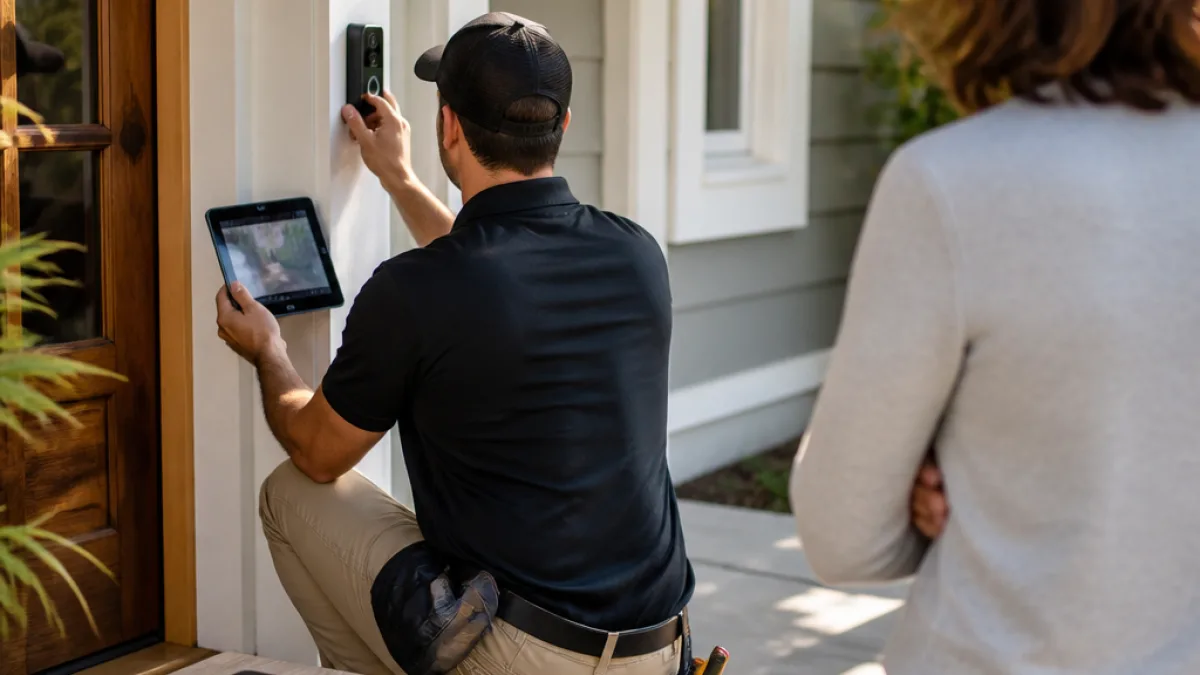
These practical choices influence project specs: whether to hardwire for continuous power, whether to provision a local NAS or NVR, and how to configure client expectations for evidence retention and monitoring. They also affect service agreements and post-installation support, since subscription decisions will change the available troubleshooting paths and supported features.
What to tell clients
When outlining options to homeowners, installers should communicate three points clearly: the doorbell can still alert and stream live video without a paid plan; it will not keep a replayable event history unless a trial or plan covered the incident; and some workarounds (manual recording during Live View, selecting a locally recording product) can provide retained footage but come with their own operational limits and responsibilities.
Framing those distinctions up front helps clients choose a solution that matches their tolerance for recurring costs, privacy preferences and desired level of retained evidence.