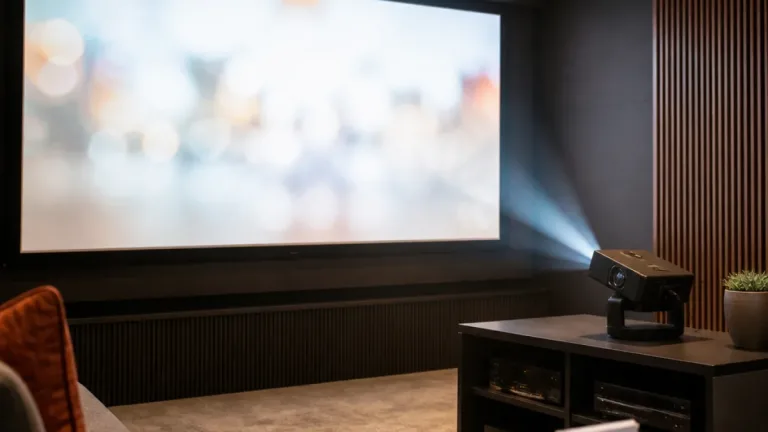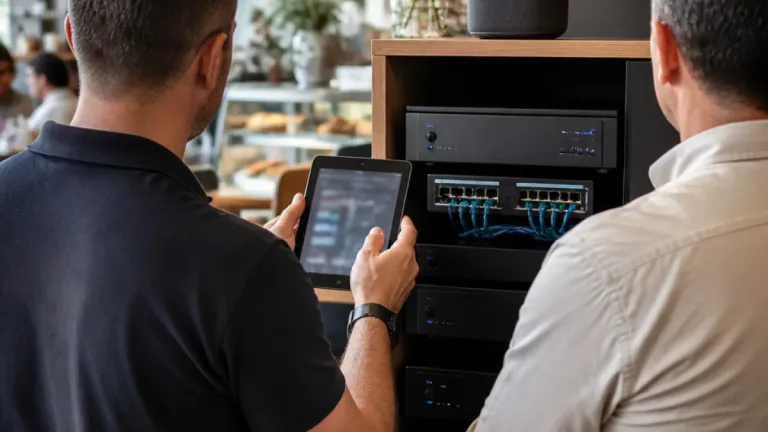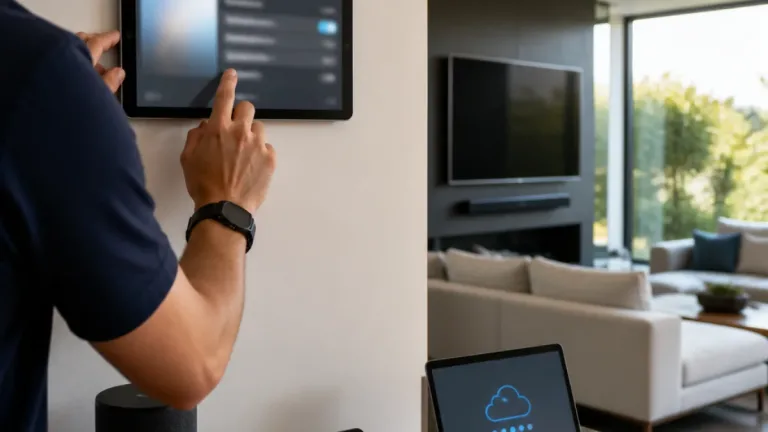
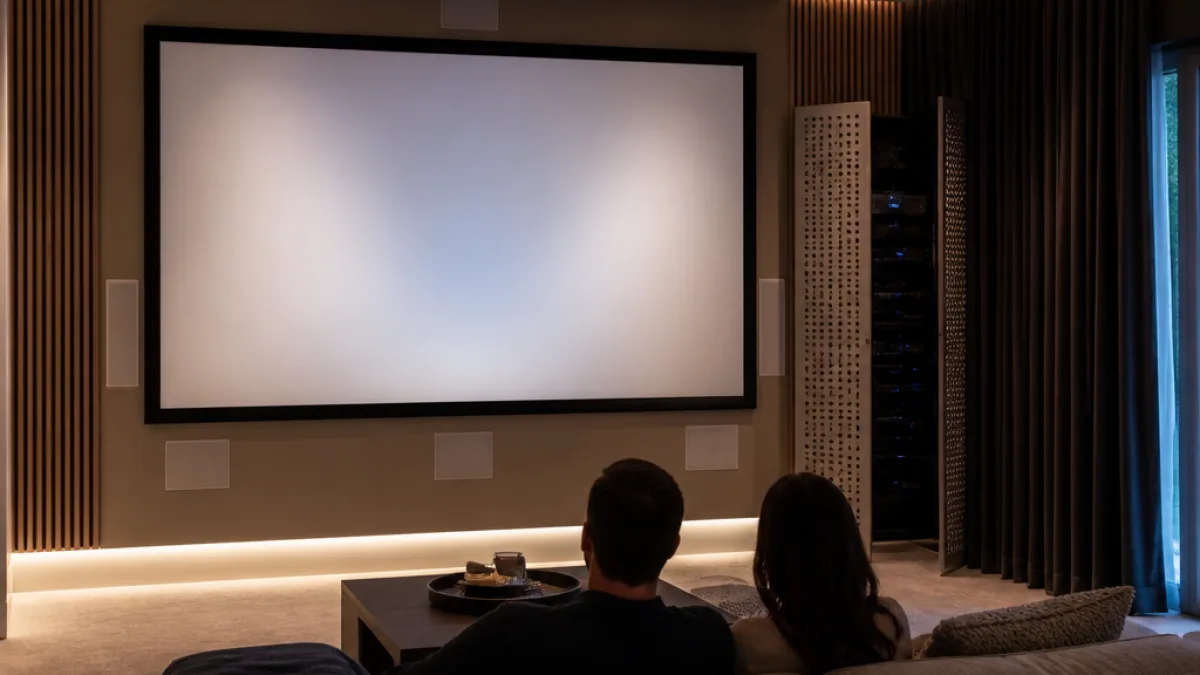
A newly completed family home with four stories now includes a dedicated cinema room designed and installed by Cinemaworks that prioritizes integration of AV, lighting and interior design so the technology remains visually discreet while delivering the performance clients expected from the integrator’s demonstration room.
Demo room set expectations and brief
Owen Maddock, owner and designer at Cinemaworks, brought the homeowners to the company’s Bristol demonstration room early in the project to let them experience picture, acoustics, lighting and interior treatments together. According to Maddock, the demonstration formed the basis of the brief: it convinced the clients of the level of performance they wanted and informed decisions about how visible the equipment should be in the finished space.
“The demo was really the starting point,” explains Owen. “As we went through different clips, you could see their reaction change. Once they had experienced a properly designed cinema, they understood what was possible and knew that was the level of performance they wanted to achieve at home.”
Integrated approach to equipment and architecture
Rather than exposing large AV components, Cinemaworks specified a scheme in which equipment is integrated into the room’s architecture and interior finishes so the cinema can function as an everyday family room and transform into a fully immersive theater when required. The project brief originally targeted a room similar in size to Cinemaworks’ demo space but architectural changes during construction enlarged the volume, which in turn required a reassessment of the AV specification to match the higher acoustic load.
The resulting system uses Ascendo loudspeakers and StormAudio processing. The larger room volume expanded seating capacity to eight people and increased distance between seats and room boundaries, prompting Cinemaworks to review loudspeaker placement, processing and likely the amplification and sub/bass strategy to preserve the demo-room experience.
Design priorities for multiuse family rooms
- Keep visible technology minimal so the space reads as a family room when not in use for cinema.
- Use a demonstration experience to align client expectations and establish performance targets.
- Re-evaluate AV specifications when the architectural volume changes to ensure consistent playback levels and imaging for the intended audience size.
The project highlights a recurring challenge for professional integrators: maintaining the cinematic performance clients hear in a controlled demo environment when translating the system into a different or larger domestic room. Cinemaworks addressed that by adjusting its AV design to accommodate increased room volume and seating capacity while preserving the integrator’s objective of making the technology unobtrusive within the interior.
| Manufacturer | Component | Role |
|---|---|---|
| Ascendo | loudspeakers | main and immersive audio reproduction |
| StormAudio | processing | room correction and immersive-format processing |
The installation demonstrates integrator-led design practices: use of a demonstration room to define client expectations, careful coordination of AV and lighting with interior architecture, and responsive specification adjustments when site conditions change. Those elements are central to producing a dedicated home cinema that meets both everyday living needs and high-performance screening demands.