Google is promoting the Nest Thermostat 4th-gen as the latest entry in its thermostat line and is bundling a Nest Temperature Sensor (2nd gen) with a recent discounted offering. For custom installers and integrators, the two details most likely to affect site prep and commissioning are the device’s wiring compatibility — Google says the unit does not require a C-wire to function — and the addition of features tied to the Google Home platform and Gemini intelligence.
What installers need to know about wiring and compatibility
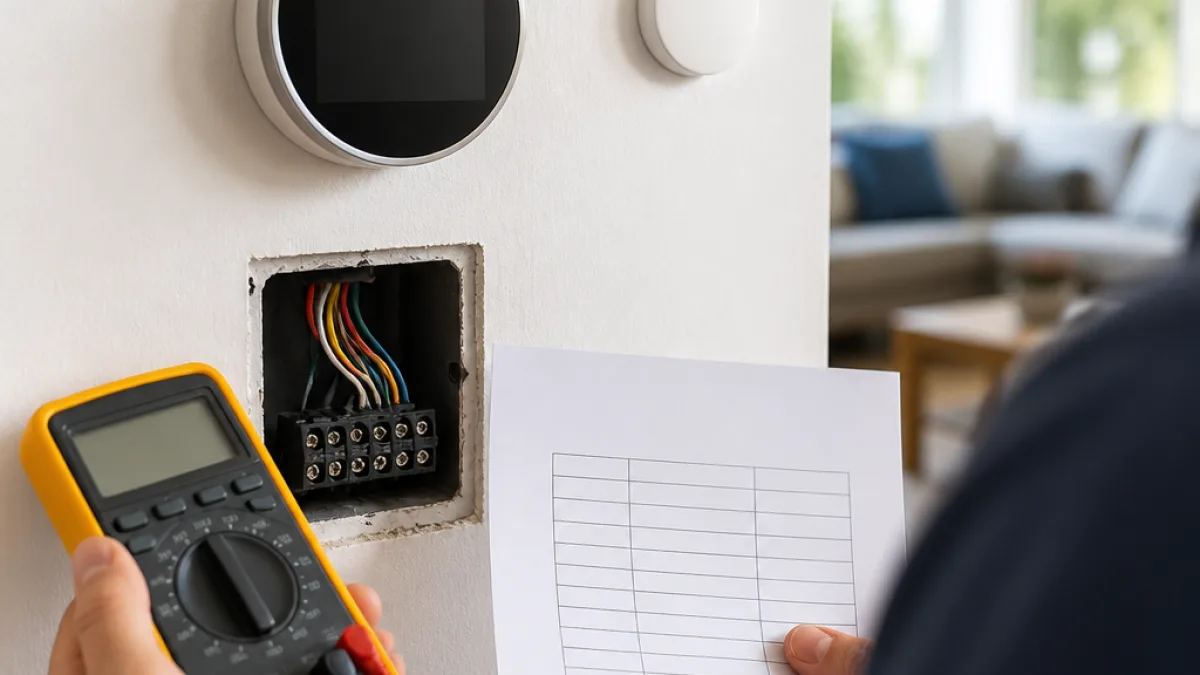
Google states the 4th-gen thermostat “doesn’t require a C-wire,” which increases out-of-the-box compatibility with many existing residential HVAC systems. That lowers the likelihood of needing a retrofit common wire or a separate power adapter in some homes, but installers should still verify system type and control wiring on each job before assuming a C-wire won’t be required.
The bundled Nest Temperature Sensor (2nd gen) is positioned as a room-level temperature reference that can help the thermostat regulate comfort across the home. Google’s promotional material recommends placing the sensor in a room that runs consistently hotter or colder than the rest of the house to improve zone comfort.
Integration and platform features
Beyond basic control, Google highlights tight integration with the Google Home app and the company’s Gemini intelligence. Feature names and capabilities called out include Dynamic Farsight (powered by Soli), a rotating bezel for manual input, and a set of built-in sensors and measurements such as Smart Ventilation air quality measurement. Those platform features affect how the thermostat appears and is managed in a finished Google Home system and can affect programming, scenes and automations that integrators deliver.
- Wiring compatibility: Google says no C-wire required, but installers should still confirm system wiring per site.
- Bundled sensor: Nest Temperature Sensor (2nd gen) included in the bundle for room-specific temperature control.
- Platform features: Google Home and Gemini integration, Dynamic Farsight, Smart Ventilation.
Google introduced the 4th-gen Nest Learning Thermostat in fall 2024; promotional messaging around a recent price reduction highlights the bundled sensor and a lower street price for consumers. The company also noted prior product support timelines when discussing legacy models: the first two generations of the Nest Learning Thermostat lost support in 2025, a detail relevant for dealers advising customers on upgrades and long-term support.
| Item | Detail |
|---|---|
| Product | Nest Thermostat 4th-gen |
| Bundled accessory | Nest Temperature Sensor (2nd gen) |
| Wiring | Does not require a C-wire (per Google) |
| Platform | Google Home, Gemini integration; Dynamic Farsight; Smart Ventilation |
For custom installers and dealers, those facts shape pre-installation checks, commissioning procedures and the way thermostats are integrated into whole-home control systems. Confirming compatibility with the client’s HVAC equipment, planning for any additional sensors or wire runs, and documenting how the thermostat will be managed in Google Home remain necessary steps before closing a job.