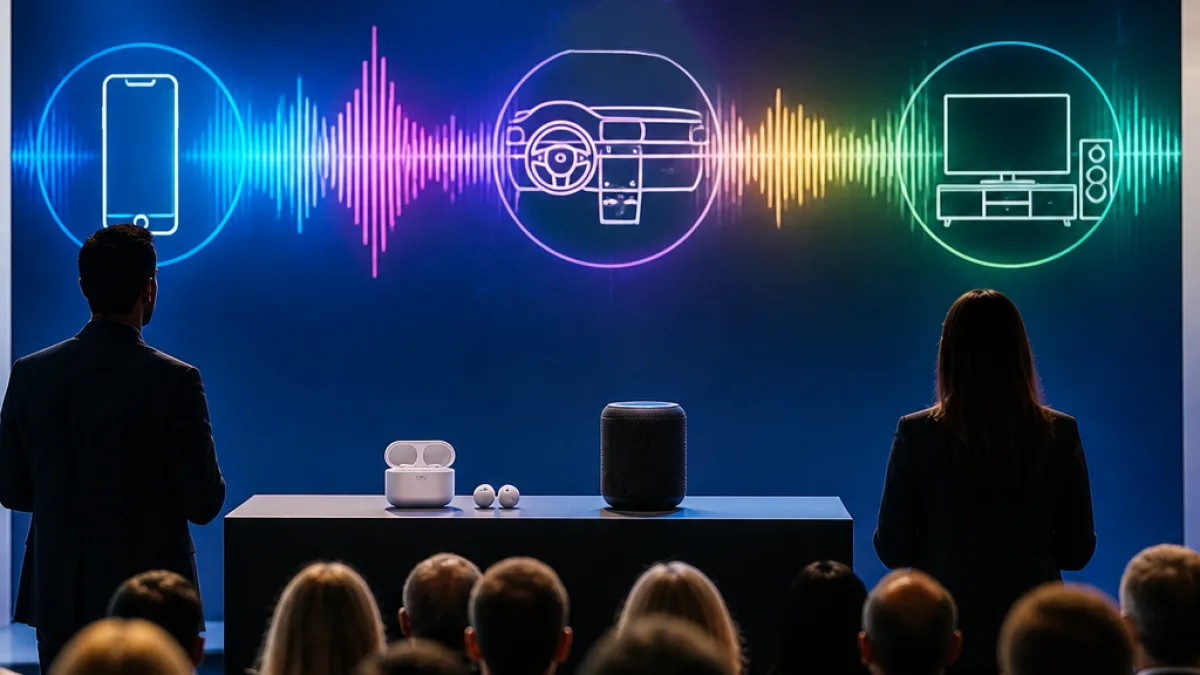
Samsung Electronics Co., Ltd. and its wholly owned subsidiary HARMAN marked the 10th anniversary of their partnership by outlining a technology strategy that emphasizes artificial intelligence and hyperconnected audio experiences across mobile devices, automobiles and homes. Company leaders framed the work as the next step in combining Samsung’s display and mobile technologies with HARMAN’s audio and automotive expertise.
Milestones and cross-brand ties
The companies pointed to a trio of anniversaries in 2026 as context for the announcement: JBL’s 80th anniversary, Bowers & Wilkins’ 60th anniversary, and the 10th year since Samsung acquired HARMAN. HARMAN executives highlighted earlier technical integrations — notably AKG audio technology being used in Galaxy devices — as examples of how the partnership has already moved from initial mobile audio work into wider automotive and consumer engagements.
“True innovation is not about devices simply performing more functions; it is about reducing the need for users to operate and manage them directly,”
Those words were attributed to Armin Prommersberger, chief technology officer at HARMAN, who described a goal for future audio systems to sense a user’s context and automatically adapt sound and services throughout daily routines.
What the companies said about AI and connected experiences
HARMAN leaders framed the next phase as delivering “next-generation connected experiences” by combining Samsung’s mobile and display know-how with HARMAN’s audio and in-vehicle systems. The stated ambition is for audio systems to move beyond manual control toward experiences that understand users’ locations and activities and provide tailored sound without constant user intervention.
- Scope: smartphones, cars and homes were explicitly cited as target environments for integrated audio services.
- Brands referenced: JBL, Bowers & Wilkins and AKG were named as legacy and technical assets within HARMAN.
- Leadership: Dave Rogers, president of HARMAN’s Lifestyle division, and Armin Prommersberger, HARMAN CTO, outlined the vision publicly through Samsung channels.
Dave Rogers pointed to past collaborations — such as AKG technology in Galaxy devices — as grounding for expanded work across digital cockpits and in-cabin solutions. Rogers described the partnership’s ability to turn ideas into scalable technologies as a mutually reinforcing dynamic between Samsung and HARMAN.
Implications for integrators and the pro channel
The announcement frames a trajectory where audio systems are increasingly networked and context-aware, potentially affecting product roadmaps and integration points relevant to installers and integrators who deploy whole-home audio, in-car systems, or multiroom streaming solutions. The companies’ emphasis on combining display, mobile, automotive and audio expertise signals continued cross-platform initiatives that could influence device interoperability, platform partnerships and value propositions presented to end users.
| item | detail |
|---|---|
| Partnership age | 10 years since Samsung acquired HARMAN |
| Brand anniversaries | JBL 80th; Bowers & Wilkins 60th |
| Executives quoted | Dave Rogers (President, Lifestyle Division); Armin Prommersberger (CTO) |
The companies described the intended outcome as an “era of intelligent audio” in which a user’s listening environment transitions seamlessly across devices and settings — from waking at home, to commuting in a car, to using mobile devices away from the house. Prommersberger said HARMAN is pursuing systems that understand users’ situations and create personalized experiences.
No product launch dates, specific software versions or channel-level availability details were included in the statements. The comments appeared in interviews and material published by Samsung’s Global Newsroom and related outlets on October 25–26, 2026.
For integrators and manufacturers in the custom installation and professional AV markets, the announcement highlights continued convergence between consumer device ecosystems and professional audio/automotive platforms — an area likely to shape future product integrations and partnership opportunities.